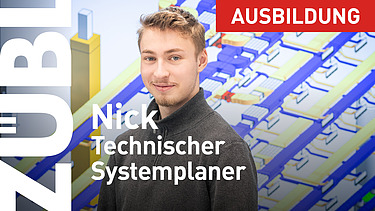
Who are you and what do you do at ZÜBLIN?
Hi, I’m Nick, I’m 19 years old and I’m currently doing my apprenticeship as a technical systems planner at ZÜBLIN. I’m part of the Central Engineering team at the Stuttgart site.
YouTube Disclaimer
Um dieses Video abspielen zu können, müssen Sie Cookies von US-Anbietern akzeptieren. Einzelheiten hierzu finden Sie unter Cookie-Einstellungen in unserer Datenschutzerklärung. Die Einwilligung zum Setzen der Cookies von US-Anbietern kann entweder hier oder unter Cookie-Einstellungen in unserer Datenschutzerklärung erteilt werden. Der Widerruf der bereits erteilten Einwilligung kann auf dem gleichen Wege erfolgen.
Not only do I draw models on the computer, but I also oversee construction projects from the planning stage right through to completion.
Not only do I draw models on the computer, but I also oversee construction projects from the planning stage right through to completion.
Nick shows why there is much more to his apprenticeship as a technical systems planner at ZÜBLIN than simply drawing models on a computer. From large-scale construction projects and teamwork to real-life insights on the building site: his apprenticeship is more varied than many people realise.
Hi, I’m Nick, I’m 19 years old and I’m currently doing my apprenticeship as a technical systems planner at ZÜBLIN. I’m part of the Central Engineering team at the Stuttgart site.
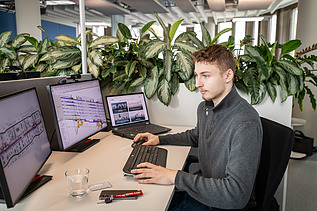
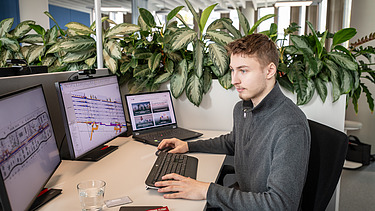
As technical systems designers, we are responsible for drawing up plans for technical installations and pipework systems, such as heating pipes. We use Revit for modelling and AutoCAD for building schematics. In this way, we produce precise drawings for heating, ventilation, air-conditioning and plumbing systems in buildings of all sizes, from small to very large. To ensure that the planning for these construction projects runs smoothly in coordination with other disciplines, we liaise closely with architects and other specialist staff.
I’ve always been interested in technical drawing and in finding solutions to problems. After finishing school, I looked online for information about several companies that offer this apprenticeship. I then chose ZÜBLIN because I was thoroughly impressed by both the location and the benefits on offer.
I always arrive early in the morning on my motorbike and then grab a coffee or a cup of tea from our kitchenette. Once I’m at work, I tackle tasks from the previous day or carry on writing in my report book. We apprentices keep this report book to record the tasks we’ve completed and the skills we’ve learnt.
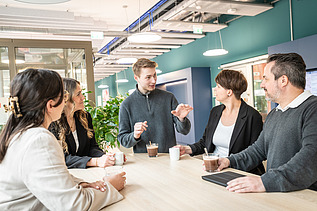
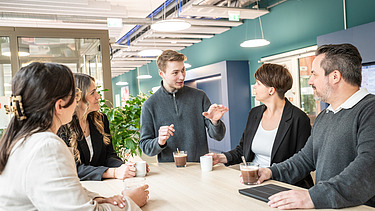
Meetings or coordination sessions with colleagues or my trainer often take place in the morning. During these, we discuss the progress of projects and clarify any outstanding issues. Afterwards, I carry on working on these projects until it’s time to take our lunch break together with the team.
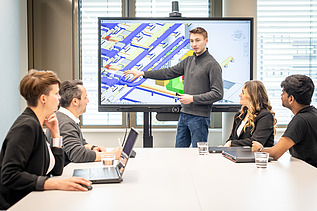
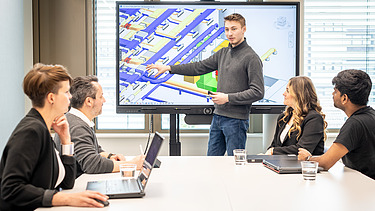
After that, I carry on with my projects or have meetings with colleagues from other sites. In the afternoon, I can finish work flexibly in consultation with my trainer, depending on how much there is to do that day.
Many people might think that you just sit at a computer and draw. Whilst that does make up a large part of the day-to-day work, there’s more to it than that. You need to have – or develop – a technical understanding of how everything works, adhere to DIN standards and be able to solve problems in a sustainable way. What’s more, you only work as a team and are constantly exchanging ideas with one another. It’s not a quiet office job as many people think.
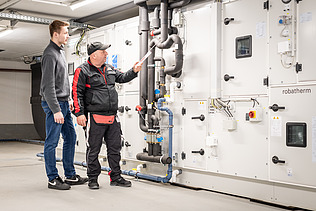
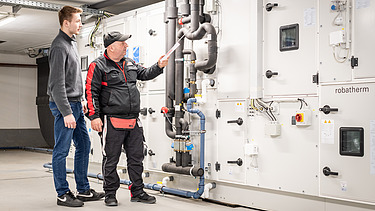
And it doesn’t stop at the planning stage; you also oversee many construction projects right through to implementation or, as in my current project, even right up to handover. Another plus is that, during the training, you get to experience everything first-hand on the building site for around four weeks a year. There, I assist the project management team with their tasks.
As for the company: before I started, I couldn’t really grasp just how big the group was. But now I know how many departments and teams work together here and pool their expertise. It’s also good for career prospects to see how many doors are open to you, as the company’s size means there are plenty of opportunities for development.
For me, visiting the Stuttgart 21 construction site as part of the ‘ZT Young Professional Days’ was a special experience. Not only because it is a very well-known and large construction site, but also because its complexity fascinated me. It was hugely impressive to see how many trades and companies are working together here and what that entails in terms of organising the technical systems.
I find the technology behind this construction project so interesting because some of the technical components were developed specifically for this particular application, and the colleagues in the building services engineering (TGA) team had to come up with some truly innovative ideas to make it work.
Because new challenges await me every day in my day-to-day work, I cannot always prepare for my tasks in advance. As a result, my job requires a great deal of spontaneity, flexibility and the ability to come up with my own solutions. Added to this are the high quality standards set by our clients, which we aim to meet at all times.
This comprehensive understanding of the time, dedication, technology and resources invested is what motivates me. After enough time spent on the training, you don’t just see a façade, but can really look deep into the building – it’s like having X-ray vision. It also drives me to want to achieve a good qualification with a university of applied sciences entrance qualification, so that I might be able to train as a technician afterwards.