A career centred on wood, craftsmanship and a whole lot of passion.
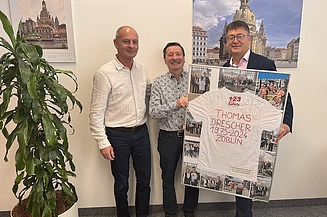
What made you decide to start an apprenticeship as a carpenter back then – and how did your journey lead you to ZÜBLIN?
I’ve been passionate about wood ever since I was a child. I’d actually always wanted to become a joiner, but during the GDR era, it wasn’t possible to train as a joiner in my region. So I started an apprenticeship as a carpenter – and looking back, that was exactly the right decision.
I did my apprenticeship at the Civil Engineering and Transport Construction Combine (ITVK) for a total of three years. The ITVK used to consist of nine divisions, such as bridge construction, tunnel construction and mechanisation, and had around 200 employees. At the time of German reunification in 1990–91, the ITVK was eventually taken over by ZÜBLIN. As a result, I automatically transferred to the company.
Which stages and roles have had a particular influence on your career?
-
 Thomas Drescher / ZÜBLIN
 -
 Thomas Drescher / ZÜBLIN
 -
 Thomas Drescher / ZÜBLIN


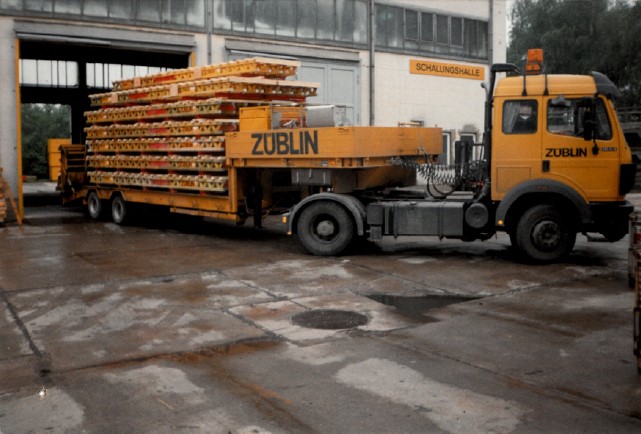
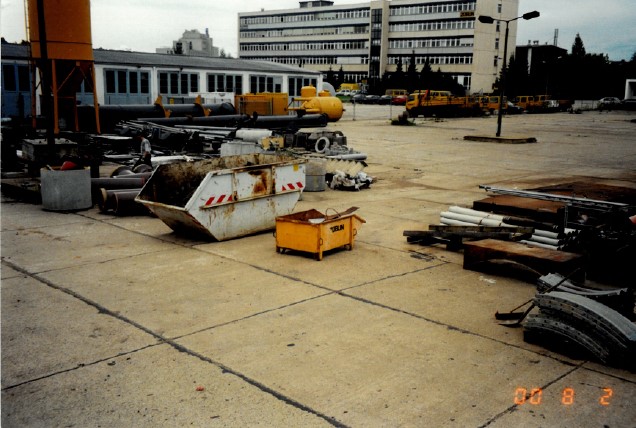
What shaped me most of all was my decades of work both in the workshop and on many ZÜBLIN building sites. I managed numerous large-scale construction sites in Chemnitz, Leipzig, Dresden and Zwickau. I also experienced the development of our building yards first-hand: from the Chemnitz Südring site right through to its subsequent integration into STRABAG BMTI. Another special experience was a six-week assignment at the building yard in Stuttgart-Zuffenhausen.
When you look back on your early years in your career: how has work on the building site changed since then?
In the past, manual labour was the order of the day: hand-nailing, heavy equipment – the work was very physical. After reunification, modernisation set in: suddenly there were tools such as cordless screwdrivers, pneumatic nailers and many new machines.
Procuring materials and tools also became much easier and more extensive, and old tools were gradually replaced. A great deal has changed, particularly in road construction, thanks to modern pavers.
In the West, much had already been modernised before the fall of the Berlin Wall. These devices and technologies were only gradually introduced here in the East. I’ve witnessed this development very closely over the years.
Which projects do you particularly enjoy looking back on?
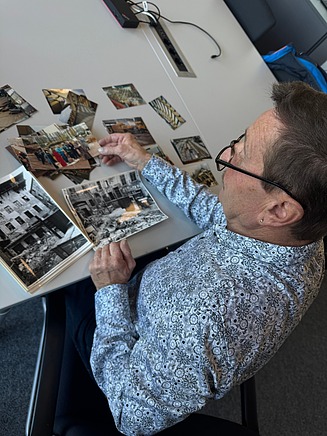
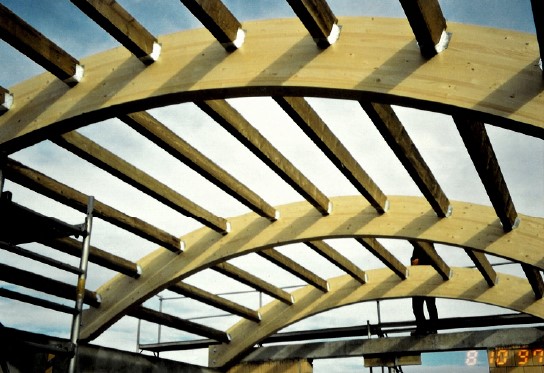
The Chemnitz waterworks, with its timber structure, is definitely one of them. The Röhrsdorf Centre in Chemnitz still impresses me today because of its enormous scale.
I also have particularly fond memories of the major industrial projects at VW in Zwickau and Chemnitz, as well as my work on the Porsche Leipzig site, for which we supplied formwork, amongst other things. For me, some of the most impressive infrastructure projects include the City Tunnel in Leipzig and the Glauchau sewage treatment works.
In Dresden, I was involved in the Altmarkt-Galerie, the Stadtforum and the Hotel am Neumarkt – landmark projects in urban building construction. I also have fond memories of various housing developments in Leipzig and a number of residential buildings in Chemnitz, which I was involved with over many years.
What was the biggest challenge in your career? How did you deal with it?
Particularly large-scale projects, with their complex dimensions, were challenging. I also had to adapt time and again to new technology, new processes and further developments.
At times, staffing decisions were also challenging. Projects were planned with fewer in-house staff, but in practice it quickly became apparent that this solution was not viable. This once again highlighted just how important our colleagues are: they stand for high quality and are indispensable to the success of a project.
What advice would you give to young colleagues starting with us today?
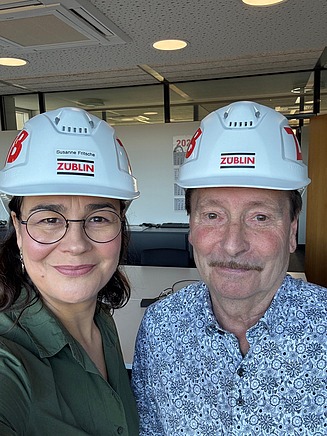
ZÜBLIN offers a wide range of opportunities and good prospects for career development. Our apprentices, in particular, are provided with excellent equipment – from tools and personal protective equipment (PPE) right through to rucksacks and water bottles. Large companies like ZÜBLIN offer job security, modern equipment and well-established processes.
Appreciation is also a top priority: summer parties, celebrations – even us pensioners are invited. ZÜBLIN stands for exceptional quality and strong team spirit – and you can really feel it!
How did you find the transition into this new phase of your life, and how do you spend your newfound free time?
The transition into retirement went much better than I’d expected. I was worried that I might miss something – but that didn’t happen. Everyday life afterwards was very relaxed.
I’m married, have two daughters and grandchildren – who, of course, get plenty of my time. My other great passion is breeding German Shepherds. I place great importance on quality. Our large plot of land provides the ideal conditions for this. I’m also active in the dog club: I train there, help out at the clubhouse and lend a hand with repairs or events. And I have a little hobby on the side: I collect folding rulers – I now have over 500 of them.
What are your hopes for the coming years – for yourself and perhaps also for ZÜBLIN?
Above all, I hope for good health for myself and my family. We’re planning a holiday by the Baltic Sea in the summer of 2026 with the grandchildren. And perhaps in 2027 we’ll fulfil a dream: a round trip through England – including the Rosamunde Pilcher castles.
For ZÜBLIN, I hope for a healthy order book, a continued strong reputation, successful recruitment of young talent and the continued great team spirit we have. I’m already looking forward to more get-togethers and celebrations with my former colleagues.
Thank you, Thomas, for the fascinating insights into your career path! We wish you and your family all the very best. Enjoy your well-deserved retirement!
Do you want to create projects that stand the test of time?
Then have a look at our jobs board!
Find your starting point