From intern to quality manager on a major project.
What was your journey into the construction industry like? Was it always your aim to work in this sector?
Even as a child, I was really fascinated by buildings – the bigger and more elaborate they were, the more my eyes would light up. After finishing school, I did an apprenticeship as a draughtswoman in my home town of Osnabrück. My main aim was to see whether I could actually envisage a whole working life in this sector. This was followed by a move to southern Germany, whereI completed a Bachelor’s degree at the University of Applied Sciences in Stuttgart and a Master’s degree at the Technical University of Munich.
You’ve been with ZÜBLIN since 2011. What has motivated you to remain loyal to the company for so many years?
Even back then, as an intern at the Stuttgart head office, I was won over by the family-like atmosphere within the teams. No matter what job someone does, a jigsaw puzzle only forms a complete picture when all the pieces are in place – and it’s the same within the teams working on projects or in the office.
How did your career path begin and what stages have you gone through?
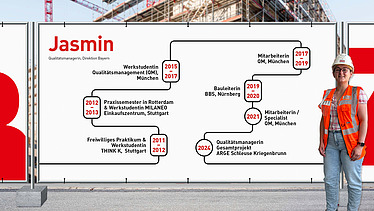
Whilst I was at university, I wanted to earn a bit of extra money on an exciting building site, which is why I started as a voluntary intern at ZÜBLIN in Stuttgart in 2011. I stayed on the project as a working student and was able to experience a great deal, from the foundation slab right through to the first inspections.
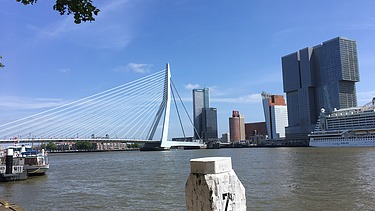
For my work placement semester, I was given the opportunity to work on the ‘DeRotterdam’ construction site in the Netherlands. Back in Stuttgart, I returned to the MILANEO construction site as a working student. Instead of working on the urban quarter, I was now involved in the shopping centre under construction.
When I moved to Munich for my Master’s degree, it was clear to me that I wanted to work for ZÜBLIN again. There, I supported the Quality Management (QM) team at the Bavaria branch as a working student. Initially behind the scenes, facilitating knowledge transfer, and later also carrying out audits and quality assurance inspections on our building sites.
You’ve gained experience in both site management and quality management. What ultimately made you decide to go into quality management?
I originally studied with the aim of becoming a site manager. However, I initially started as a permanent member of staff in quality management at the Bavarian regional office. I took the plunge into construction management in 2019/2020, where I supported the BBS Nuremberg project as part of the structural works team and oversaw smaller construction projects within our in-house operations.
One of the reasons I’ve lost my heart to QM is down to my boss at the time and my colleagues. During my degree, I had no direct exposure to traditional quality management or quality assurance. It was only as a working student that I got to know and love these roles and realised just how well they suited me. So, after my stint in operations, I was happy to return to QM – first as a staff member,and for the past few years as a specialist.
Which project are you currently working on, and what are the specific challenges in quality management?
In April 2024, ZÜBLIN, together with various group units as a consortium with Bauer Spezialtiefbau, was awarded the contract for the replacement construction of the Kriegenbrunn lock. I have taken on the quality management of the entire project for this consortium. I will also be overseeing the follow-up project – the Erlangen lock.
In a joint venture, it is extremely important to bring team members from the various companies on board and involve them both in defining the process workflows and in ensuring compliance with quality standards.
What does a typical working day look like for you?
As a quality manager, I advise the overall project management team, the head of the technical back-office and the senior site management on quality matters. My responsibilities also include coordinating and preparing relevant documentation. Initiating improvement measures and facilitating knowledge transfer within the project team are also part of the role. I oversee internal audits and act as the point of contact for the quality departments of the consortium partners. In addition, I am responsible for providing documentation to the client.
What makes quality management in the construction industry so exciting and varied?
Quality management in the construction industry is particularly exciting because no two days are the same – every construction project is unique and comes with its own set of requirements.
Working with the client, your own project team and subcontractors requires strong communication skills and, above all, a certain degree of assertiveness.
Is there a project in your career that has particularly stuck in your memory?
My work placement at ‘DeRotterdam’ in the Netherlands still holds a special place in my heart, even more than 13 years on. A 150-metre-high skyscraper on the River Maas, where I was able to watch the final third of the structural work take shape. The topping-out ceremony took place on the roof of the central tower – the architect standing before us, Rotterdam at our feet. A diverse project team from Germany, the Netherlands and Belgium: we always got on well together. Alongside our day-to-day work, there was plenty of time for joint outings, cook-offs or darts matches during our lunch breaks. I’m really pleased that I’m still in close contact with some of my colleagues from back then.
What does #workonprogress mean to you, and how do you put it into practice in your work?
Quality managers naturally have a keen interest in driving progress. The pursuit of improvement is, in a sense, part of our job description.
What are your hopes for your future at ZÜBLIN?
As long as I can continue to enjoy a varied working day surrounded by brilliant colleagues, I’ll be happy to go to work. And apart from that? Exciting projects are, of course, always nice too.
What advice would you give to young people aiming for a career in the construction industry?
Nothing is as constant as change – and that applies to the construction industry too. Stay open to learning. Rest assured that there are still so many exciting things in store for you after your apprenticeship or degree. With technical understanding and good communication skills, we can achieve a great deal together. Modern and sustainable construction methods offer the opportunity to create something that will stand the test of time. Whether it’s buildings or infrastructure, the construction industry can shape and help define the lives of many generations.
Thank you very much for the interesting insights into your career path, Jasmin. We wish you continued success, exciting projects and plenty of joy in what you pursue with such passion every day!
Do you want to do more than just support progress – do you want to play an active part in shaping it?
Then join ZÜBLIN and put your strengths to good use on exciting projects.
Your first steps at ZÜBLIN